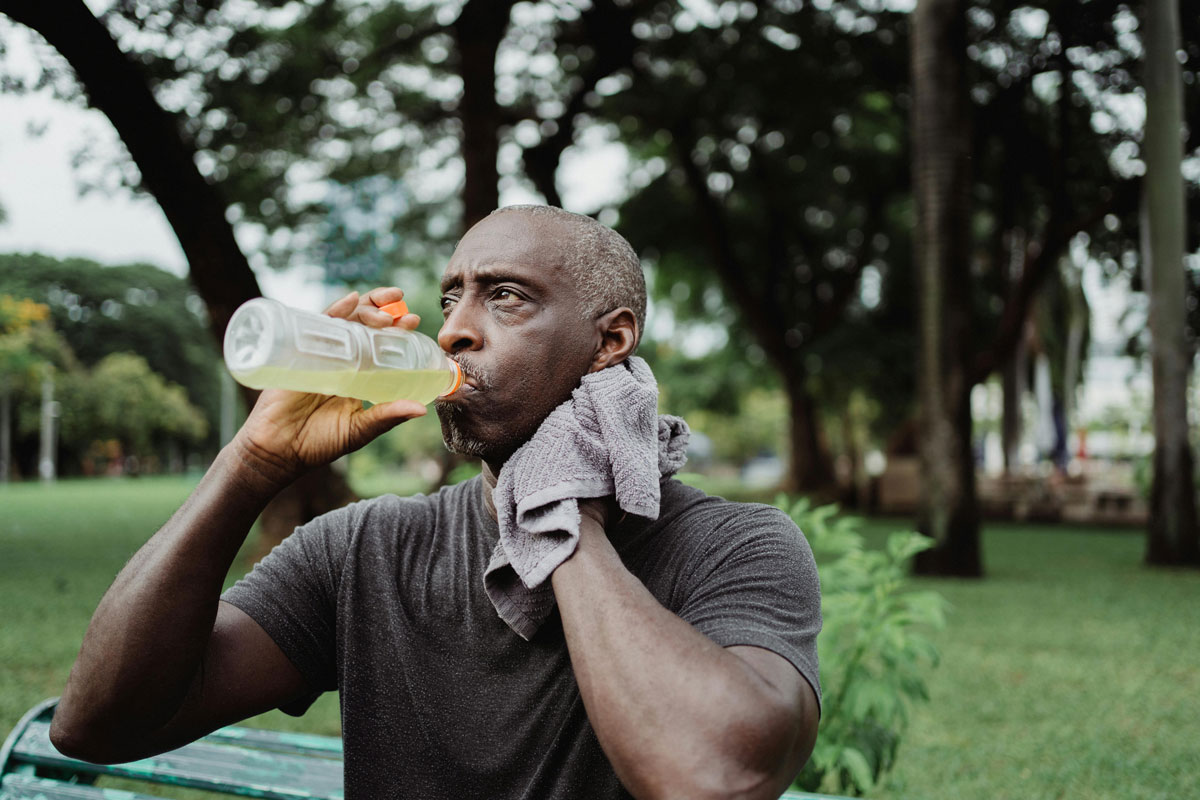
Did you know that an average person sweats between 0.8 and 1.4 litres of fluid per hour of exercise? While many understand the importance of replacing lost fluids, fewer realize that sweating also leads to the loss of essential vitamins and nutrients – not just water and salt.
Regardless of whether you’re a casual or professional athlete, physical activity increases the body’s demand for certain water-soluble vitamins, making post-workout replenishment an important part of recovery and overall wellbeing. Read on to find out which nutrients commonly need replacing after exercise and how to replenish them.
What happens to vitamins and minerals as you sweat?
When we exercise, the body loses water-soluble vitamins through sweat. This includes B complex vitamins and vitamin C. Unlike fat-soluble vitamins, these vitamins aren’t stored in large amounts within the body and need to be regularly replaced, especially after intense physical activity.
The role of B vitamins and vitamin C
B vitamins act as coenzymes in the energy production of cells. Exercise appears to especially increase the loss of thiamin, riboflavin and vitamin B6. In fact, the body might need to take in twice the daily recommended amount of these vitamins to replace what the body sweats out through exertion.
In the case of vitamin C, studies have found blood and plasma levels of vitamin C to be lower in those who exercise, since stores are used to combat exercise-induced oxidation in muscles and other cells, which is brought on by physical activity. Vitamin C also plays an important role in muscle growth, as it’s essential for building collagen, the connective tissue that helps repair tissues and tendons.
Research shows that vitamin C may even help reduce post-exercise pain and inflammation due to its ability to help repair the tiny tears in our muscle fibres that can result in muscle soreness and pain after workouts. Proper vitamin C supplementation both pre and post-workout can be effective in helping prevent deficiencies and promote faster muscle recovery.
How can you replenish your vitamin levels post-workout?
Those following a low-fat or low-calorie diet, and those who don’t eat enough fruits, vegetables and whole grains may be at a higher risk for exercise-induced vitamin deficiency. However, eating a balanced diet with foods rich in vitamin C and B vitamins, and taking supplements when needed, can help ensure that your body has everything it needs to thrive after a workout.
Foods rich in B vitamins:
- Whole grains
- Legumes
- Beef liver
- Poultry
- Salmon
Foods rich in vitamin C:
- Red peppers
- Grapefruit
- Oranges
- Kiwi
- Green peppers
If you’re looking for supplemental options to support your diet, try reaching for CanPrev’s BioActive B, a complete B-complex featuring all eight water-soluble B vitamins, plus choline and inositol to support your body’s B vitamin needs.
CanPrev’s Liposomal Vitamin C offers 500mg of vitamin C per teaspoon in a patented delivery system that swiftly and safely transports active nutrients direct-to-cell.
Exercise places unique demands on the body, and proper recovery goes beyond hydration alone. Replacing lost vitamins through diet and supplementation can help fuel your training regimen and keep you performing at your best.
How do you monitor mineral loss/maintain your levels during and after a workout? Tell us! Leave a comment in the section below.






Leave A Comment